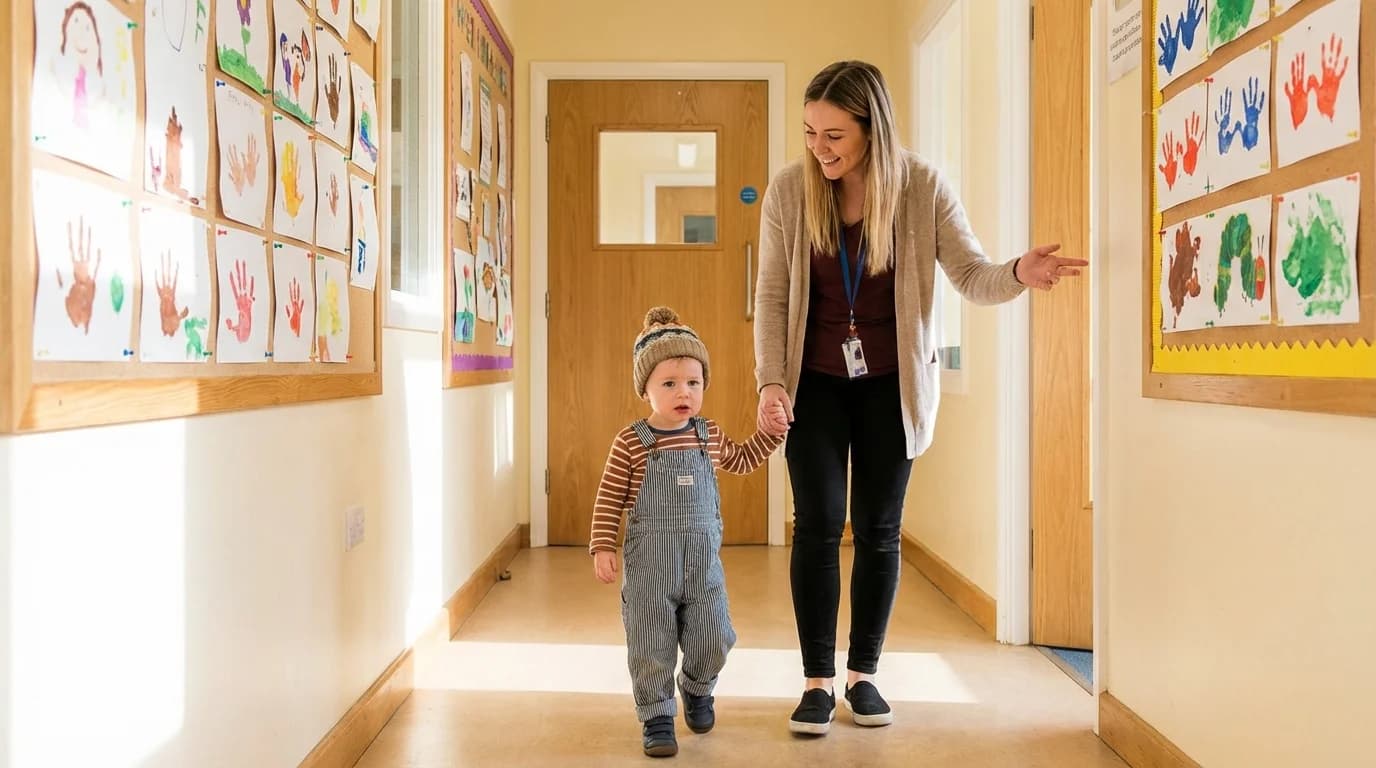
Your child has settled into their daycare classroom. They know the teachers, the routines, and the other children. Then you receive a notice: your child will be transitioning to the next classroom. For many parents in East Flatbush and across Brooklyn, this news brings a mix of pride that their child is growing and anxiety about how the change will go. If you are feeling both of those things at once, that is completely understandable.
Classroom transitions are one of the most significant events in a young child's daycare experience, and they are also one of the most common sources of questions from parents. When does it happen? Why is my child moving? Will they be okay? What if they are not ready? This article answers all of those questions and walks you through what to expect before, during, and after your child moves to a new classroom.
When Do Classroom Transitions Happen?
In most licensed daycare programs in New York City, classroom transitions are tied to a combination of age, developmental readiness, and regulatory requirements. The NYC Department of Health and Mental Hygiene (DOHMH) sets specific teacher-to-child ratio requirements based on age groups, which directly influences how classrooms are structured and when children move between them.
The typical classroom groupings at most daycare programs look something like this:
Infants, generally from about six weeks to around 12 months, are in the smallest classroom groups with the lowest ratios. Toddlers, roughly 12 to 24 months, move into a classroom designed for increased mobility and exploration. The twos classroom serves children from approximately 24 to 36 months. And the preschool or pre-K classroom serves children from three years old through kindergarten entry.
The exact timing varies by program. Some transitions happen on or near a child's birthday. Others happen at natural transition points such as September, January, or the start of summer. Many programs transition groups of children together rather than one child at a time, which can help ease the social adjustment.
What Triggers a Classroom Move?
Age is the most common trigger, but it is not the only factor. Quality daycare programs consider several elements when deciding that a child is ready to transition.
Regulatory Ratios
New York State and City regulations mandate specific teacher-to-child ratios for different age groups. According to NAEYC guidelines on teacher-child ratios, younger children require more individualized attention. As children age out of a ratio group, they need to move to a classroom with the appropriate staffing level. This is not optional; it is a licensing requirement that protects your child's safety and ensures adequate supervision.
Developmental Readiness
Beyond age alone, teachers assess whether a child is developmentally ready for the expectations of the next classroom. Programs that use the Teaching Strategies GOLD assessment system have objective data on each child's progress across multiple domains including social-emotional development, language, cognitive skills, and physical development. A child who has recently turned two but is still working on skills typically mastered in the younger toddler room may benefit from a slightly delayed transition with additional support. This is the kind of individualized decision-making that defines quality care. Our article on Creative Curriculum at daycare explains how these assessments inform classroom decisions.
Social Readiness
Teachers also consider a child's social readiness. Can they participate in small group activities? Are they beginning to engage in parallel or cooperative play? Do they show interest in what the older children are doing? These social indicators help teachers gauge whether a child will thrive in the more structured, socially complex environment of the next classroom.
Space and Enrollment
Practically speaking, transitions also depend on whether there is space in the receiving classroom. Programs carefully manage enrollment and transitions to maintain appropriate group sizes and ratios at all times.
How Quality Programs Manage the Transition
The difference between a stressful transition and a smooth one often comes down to how well the daycare program plans and executes the process. Here is what a well-managed transition looks like.
The Gradual Phase-In Approach
The gold standard for classroom transitions is a gradual phase-in over one to two weeks. Rather than simply moving a child from one classroom to another on a given day, the process typically unfolds in stages.
During the first phase, the child visits the new classroom for short periods, usually during a fun activity like art or outdoor play. Their current teacher may accompany them, providing a secure base. In the second phase, visits become longer. The child might eat a meal or snack in the new room and begin participating in the new classroom's routines. In the third phase, the child spends most of the day in the new classroom but may return to their original room for nap time or at the end of the day. Finally, the child moves fully into the new classroom.
This gradual approach respects the child's need for predictability and allows them to build relationships with new teachers and peers before the full transition occurs. Research from Zero to Three consistently shows that gradual transitions produce better outcomes than abrupt changes.
Teacher Communication and Documentation
In programs that follow the Creative Curriculum framework, the current teacher prepares a detailed summary of each transitioning child for the receiving teacher. This includes the child's developmental progress as documented through ongoing assessment, their interests, their temperament, any allergies or health considerations, family routines, and strategies that have been effective for soothing, engagement, and learning. This handoff ensures continuity of care and prevents the new teacher from starting from scratch.
Parent Communication
Quality programs communicate with families well in advance of a transition. You should expect to receive written notice of the upcoming change along with information about the new classroom, the teachers, the daily schedule, and the transition timeline. Many programs also offer a parent orientation or meeting with the new teachers before the transition begins. If your program is not communicating proactively about transitions, it is entirely appropriate to ask for this information.
How Children React to Classroom Transitions
Every child responds differently to change, and there is a wide range of normal reactions. Understanding what to expect can help you respond with confidence rather than worry.
Common Reactions
Some children are excited about moving to the "big kid room" and adjust quickly. Others experience a temporary regression in behavior or skills. You might see increased clinginess at drop-off, changes in sleep patterns, more frequent tantrums, or a return of behaviors they had previously outgrown. This is a normal stress response and is closely related to the adjustment process we describe in our article about separation anxiety at daycare drop-off.
According to the American Academy of Pediatrics, temporary behavioral changes during transitions are expected in young children and typically resolve within two to four weeks as the child builds familiarity and trust in the new environment.
The Adjustment Timeline
Most children settle into a new classroom within two to three weeks. The first few days may involve tears or resistance. By the end of the first week, many children are engaging with the new environment during activities but may still seek comfort during less structured times. By the second or third week, the new classroom begins to feel like home. Some children take longer, and that is okay. Every child has their own timeline for adjustment.
How Ratios Change as Children Grow
One of the questions parents frequently ask is why their child's new classroom seems to have more children per teacher. The answer lies in the developmental capabilities of children at different ages and the regulatory framework that governs licensed child care.
The NAEYC's Developmentally Appropriate Practice guidelines recommend ratios that reflect children's growing independence, self-regulation, and ability to participate in group settings. Infants need nearly constant one-on-one attention. Toddlers need close supervision but can engage in brief independent or parallel play. Preschoolers can participate in teacher-led group activities, follow multi-step routines, and manage some self-care tasks independently.
While the ratio number may increase, the nature of the classroom experience also changes. Preschool classrooms offer more structured learning opportunities, more complex materials, and more peer interaction than toddler rooms. Your child is gaining independence, social skills, and cognitive capabilities that allow them to thrive with a different classroom structure.
What Parents Can Do to Support a Smooth Transition
Your role as a parent during a classroom transition is important. Here are evidence-based strategies to help your child adjust.
Talk about the change positively and matter-of-factly. Avoid overhyping it ("You're going to LOVE your new room!") or expressing your own anxiety. Children are remarkably attuned to their parents' emotions. A calm, confident tone communicates that this is a normal, safe change.
Visit the new classroom together if the program allows it. Let your child explore the space, meet the teachers, and see the materials. Familiarity reduces anxiety.
Maintain routines at home during the transition period. When daycare is changing, keeping home routines consistent provides an anchor of predictability. Bedtime routines, morning routines, and meal routines should stay as stable as possible. Our article on toddler daily routines discusses how consistency supports young children's sense of security.
Read books about change and new experiences. Stories about starting new things, making new friends, or visiting new places can help children process the transition through narrative. Your local Brooklyn Public Library branch is a wonderful resource for age-appropriate books on this topic.
Be patient with regression. If your potty-trained child has a few accidents, if your good sleeper starts waking at night, or if your independent child becomes clingy, respond with warmth and patience. These are temporary responses to stress, not permanent setbacks.
Communicate with the new teachers. Share what works for your child at home: comfort items, soothing strategies, favorite activities. Building a partnership with the new classroom team from the start sets everyone up for success. The social-emotional support strategies we discuss in our article on social-emotional development at daycare apply equally well during transition periods.
When to Raise Concerns
While most transitions resolve smoothly within a few weeks, there are situations where it is appropriate to advocate for your child. If your child is still showing significant distress after three to four weeks in the new classroom, if they are refusing to eat or sleeping significantly less, or if the behavioral changes seem to be intensifying rather than gradually improving, schedule a meeting with the classroom teachers and the program director. Together, you can evaluate whether additional support is needed, whether the transition plan needs adjustment, or whether there are other factors contributing to the difficulty.
Remember that you know your child best. Your observations at home are a valuable complement to what teachers see during the day, and quality programs welcome that input.
Growth in Motion
Classroom transitions are a tangible reminder that your child is growing. They are developing new skills, forming new relationships, and becoming more capable and independent every day. While the process can feel unsettling for both parents and children, it is also an opportunity to build resilience and adaptability, two skills that will serve your child well throughout their life.
At Einstein Daycare in East Flatbush, we take classroom transitions seriously. Our gradual phase-in process, detailed teacher communication, and partnership with families ensure that every child moves to their new classroom feeling supported, safe, and ready to learn.
Wondering About Your Child's Next Classroom?
At Einstein Daycare, we guide families through every transition with care and clear communication. Schedule a tour to see our classrooms and meet our teachers. Schedule a tour online or call us at (718) 618-7330.