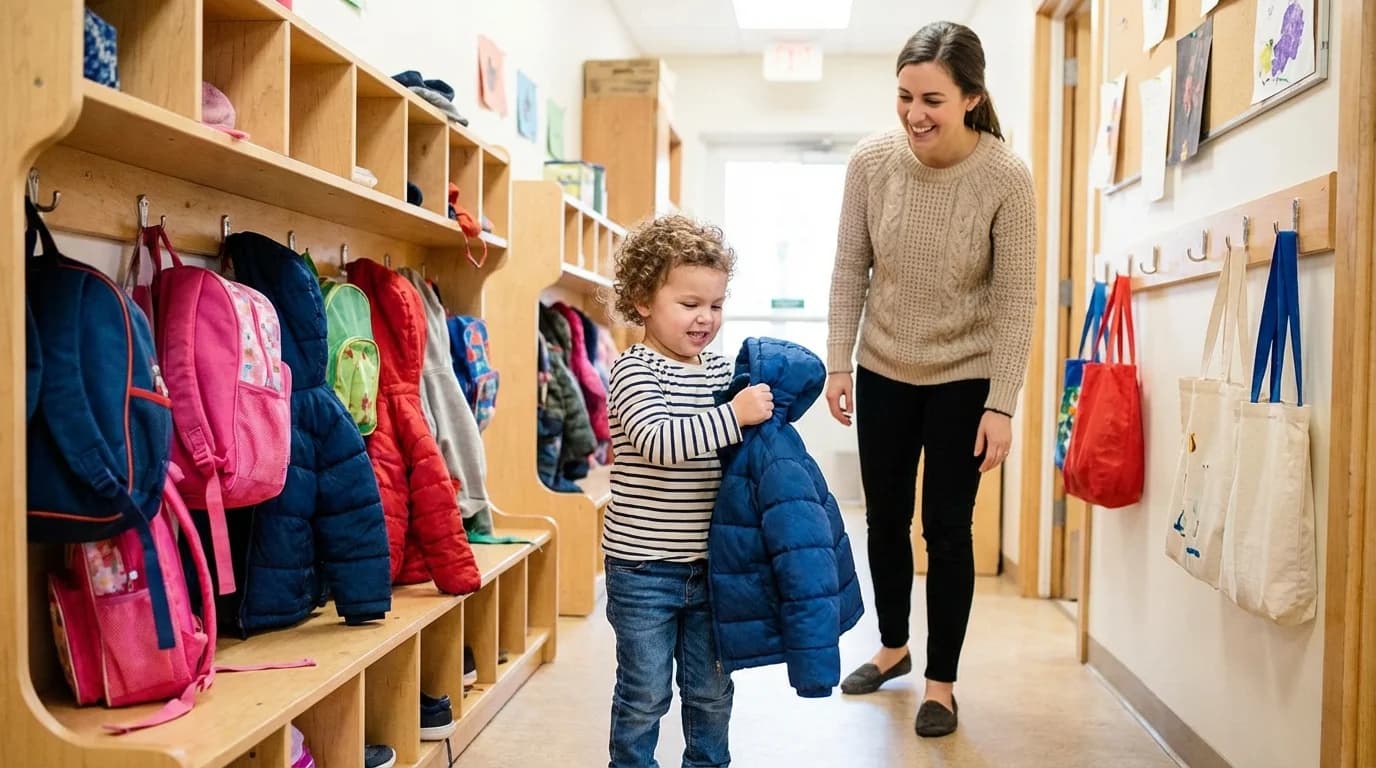
One of the most rewarding parts of early childhood is watching a young child do something entirely on their own for the first time. The look of pride on a two-year-old's face when she pulls on her own shoes, or the quiet confidence a four-year-old shows when he pours his own water at lunchtime, represents something far more significant than a simple task completed. These moments mark the development of self-help skills, a foundational category of abilities that shape how children see themselves as capable, competent individuals in the world around them.
For families in East Flatbush, Flatbush, and the greater 11212 area of Brooklyn, understanding how daycare supports the development of these skills can help parents appreciate why their child comes home insisting on buttoning their own jacket or washing their hands without help. At Einstein Daycare, located at 900 Lenox Rd in Brooklyn, self-help skill development is woven into every part of the daily routine, giving children the consistent practice and gentle guidance they need to grow into confident, independent learners.
What Are Self-Help Skills and Why Do They Matter?
Self-help skills, sometimes called adaptive skills or self-care skills, are the everyday tasks that allow a person to take care of their own basic needs. For young children, these include feeding themselves, dressing and undressing, washing hands, using the toilet, cleaning up after activities, and managing personal belongings. While these may seem like simple tasks to adults, each one involves a complex combination of fine motor coordination, sequencing, memory, problem-solving, and self-regulation.
According to the American Academy of Pediatrics, self-care abilities are among the key indicators of kindergarten readiness. Teachers consistently report that children who can manage basic self-care tasks independently are better positioned to focus on learning, participate in group activities, and navigate the school day with confidence. The CDC's developmental milestone guidelines also emphasize that self-care skills like dressing and feeding are important markers of a child's overall developmental progress.
Research from the Harvard Center on the Developing Child shows that self-help skills are deeply connected to the development of executive function, the set of mental skills that includes working memory, flexible thinking, and self-control. When a child follows the steps to wash their hands or puts on their coat in the correct sequence, they are practicing the same cognitive processes they will rely on for reading, mathematics, and problem-solving throughout their school years.
Self-Help Skills by Age: What to Expect
Every child develops at their own pace, but understanding general milestones helps parents and teachers provide the right level of support. Here is a broad overview of the self-help skills children typically develop during the daycare years.
Infants and Young Toddlers (6 to 18 Months)
At this stage, children are beginning to explore independence in very early ways. They may start holding their own bottle, picking up small pieces of food with a pincer grasp, and attempting to use a spoon, though most of the food may end up on the floor or in their hair. The AAP notes that by fifteen months, most toddlers can fill a spoon and get it to their mouth with increasing consistency, and by eighteen months, many can use a spoon, fork, and cup when they choose to. They may also begin cooperating with dressing by lifting their arms or pushing their feet into shoes.
Older Toddlers (18 to 36 Months)
This is often called the "me do it" stage for good reason. Toddlers in this age range are driven by a powerful desire to do things independently. They can typically pull off easy clothing items like hats and socks, attempt to wash and dry their hands with guidance, begin to show interest in toilet learning, help with simple cleanup tasks, and feed themselves with increasing neatness. The National Association for the Education of Young Children (NAEYC) recommends that caregivers provide opportunities for toddlers to practice independence, such as carrying their own lunch boxes, putting toys away, and helping with simple tasks. They also advise giving children extra time in the schedule for activities like putting on shoes, since rushing undermines the learning process.
Preschoolers (3 to 5 Years)
By the preschool years, children are capable of remarkable independence when given consistent practice. They can dress and undress themselves with minimal help, manage buttons, snaps, and zippers, wash and dry their hands thoroughly, use the toilet independently, pour from a small pitcher, use utensils correctly, blow their nose and cover their mouth when coughing, and clean up their materials and workspace after activities. According to the CDC, preschoolers between three and five should be able to help dress and undress themselves as part of normal developmental expectations.
How Daycare Supports Self-Help Skill Development
While self-help skills can certainly be practiced at home, the daycare environment offers several unique advantages that accelerate growth in this area.
Consistent Routines Create Muscle Memory
One of the most powerful tools for building self-help skills is repetition within a predictable routine. At daycare, children wash their hands before every meal, put away materials at the end of every activity period, and follow the same dressing sequence before going outdoors, day after day. This consistency allows skills to move from effortful, step-by-step processes to automatic habits. At Einstein Daycare, our daily schedule provides the kind of structured repetition that children need, with built-in time for children to practice tasks at their own pace rather than being rushed through them.
Peer Modeling Accelerates Learning
One of the most underappreciated benefits of a group care setting is peer modeling. When a two-year-old watches a three-year-old zip up their own jacket, something powerful happens. The younger child sees that the task is achievable by someone who is not an adult, not impossibly far ahead in ability, but just a little further along. This kind of near-peer modeling is often more motivating than adult demonstration. Children in mixed-age or multi-age classrooms frequently surprise their parents with new skills picked up simply by observing their slightly older classmates.
Teacher Scaffolding: The Art of Helping Just Enough
Skilled early childhood teachers know that the goal is not to do things for children, but to support them in doing things for themselves. This approach, known as scaffolding, involves breaking a task into manageable steps, offering just enough assistance for the child to succeed, and gradually withdrawing support as competence grows. For example, a teacher might start by putting a child's jacket on the floor with the tag facing up, then show the child how to slide their arms in and flip it over their head. Over time, the teacher steps back until the child manages the entire process independently.
This approach aligns with what Zero to Three describes as the importance of building a child's confidence by finding ways to show them how they can be in control and make their own choices in positive ways. At Einstein Daycare, our teachers use the Creative Curriculum framework, which emphasizes this kind of intentional scaffolding across all areas of development, including self-help skills.
An Environment Designed for Independence
The physical environment plays a significant role in whether children can practice self-help skills. Child-height sinks, low coat hooks, open shelving with labeled bins, child-sized furniture, and step stools all communicate to children that this space belongs to them and that they are expected to care for it. When a child can reach the soap dispenser, see themselves in a mirror while washing hands, and hang up their own jacket without asking for help, every routine transition becomes a learning opportunity. You can read more about how our classroom setup supports learning in our article about how Creative Curriculum works at Einstein Daycare.
Key Self-Help Skills and How Daycare Builds Them
Self-Feeding and Mealtimes
Mealtimes at daycare are about far more than nutrition. They are structured learning experiences where children practice pouring, scooping, using utensils, passing dishes, and cleaning up after themselves. Family-style meals, where children serve themselves from shared bowls, build fine motor coordination, social skills, and the confidence that comes from managing their own plate. Even spills are learning opportunities, as children discover how to use a napkin or sponge to clean up and try again.
Dressing and Undressing
Getting ready to go outdoors and coming back inside provides natural, daily practice with dressing skills. Children learn to manage jackets, shoes, hats, and gloves in sequence. Teachers use visual cues, songs, and step-by-step verbal prompts to support children who are still learning. The pride a child feels when they zip their own jacket for the first time is a powerful motivator that drives continued practice.
Hand-Washing
Proper hand-washing is both a self-help skill and a health practice. The American Academy of Pediatrics recommends that children wash with soap and water for at least twenty seconds, and suggests singing a short song to help children learn to time their washing. At daycare, children practice this routine multiple times per day: before meals, after using the bathroom, after playing outdoors, and after messy activities. The repetition builds both the habit and the technique.
Toileting and Bathroom Independence
The transition from diapers to independent toileting is one of the most significant self-help milestones of early childhood. Daycare supports this process through consistent routines, a calm and pressure-free approach, and the powerful influence of peer modeling. When children see their classmates using the toilet successfully, it normalizes the process and often sparks interest and motivation. For a deeper look at how daycare and families can work together on this milestone, see our guide on potty training tips for Brooklyn families.
Cleanup and Classroom Responsibilities
At Einstein Daycare, cleanup is not a chore imposed on children. It is a shared responsibility that teaches organization, care for materials, and community membership. Children learn to sort blocks by size and shape, return art supplies to their labeled containers, push in their chairs, and wipe down tables. These tasks build categorization skills, spatial awareness, and a sense of belonging to a community that cares for its shared space.
The Connection Between Self-Help Skills and Kindergarten Readiness
When parents think about kindergarten readiness, they often focus on academic skills like knowing letters and numbers. But kindergarten teachers consistently identify self-help skills and social-emotional competence as the most important predictors of a successful transition to school. A child who can manage their own belongings, use the bathroom independently, open their own lunch containers, follow multi-step routines, and clean up after themselves is freed to focus their energy on learning.
The Harvard Center on the Developing Child provides extensive resources showing how the executive function skills built through self-help activities, including working memory, cognitive flexibility, and inhibitory control, are the same skills that underpin academic learning. A child who can follow the steps of a hand-washing routine is exercising the same sequencing abilities they will use when following the steps of a math problem.
How Parents Can Reinforce Self-Help Skills at Home
The self-help skills children practice at daycare are most effectively learned when they are reinforced at home. Here are some practical strategies for East Flatbush and Brooklyn families.
First, build extra time into your morning routine. If your child is learning to dress independently, starting ten minutes earlier removes the pressure to rush and gives them the space to practice. Second, resist the urge to step in too quickly. It can be hard to watch a child struggle with a zipper or a shoe, but the struggle is where the learning happens. Offer encouragement and verbal cues before physical assistance. Third, create an environment that supports independence at home, just as daycare does. Low hooks for jackets, a step stool at the bathroom sink, and accessible shelves for toys all send the message that your child is capable and trusted.
Fourth, use consistent language. If your child's daycare uses specific phrases or songs for routines like hand-washing or cleanup, try to use the same language at home to reinforce learning. Finally, celebrate effort rather than perfection. A shirt put on backwards is still a shirt put on independently. Acknowledge the achievement, and the correction will come naturally with practice.
Building Capable, Confident Children in Brooklyn
Self-help skills may seem small in the moment, but they represent something profound in a child's development. Each time a child successfully completes a task on their own, whether it is pouring their own milk, pulling on their boots, or washing paint off their hands, they internalize a powerful message: I can do this. That belief in their own capability is the foundation upon which all future learning is built.
At Einstein Daycare, we are honored to be part of this journey for families across East Flatbush, Flatbush, and the surrounding Brooklyn neighborhoods. Our Teaching Strategies GOLD assessment system allows us to track each child's progress across all developmental areas, including self-help skills, so that families and teachers can work together to support every child's growing independence.
See How We Build Independence at Einstein Daycare
Want to see our classrooms in action and learn how we support your child's growing self-help skills? Schedule a tour of Einstein Daycare at 900 Lenox Rd, Brooklyn, NY 11203. Contact us today to arrange your visit.
Schedule a Tour Online or call us at (718) 618-7330.