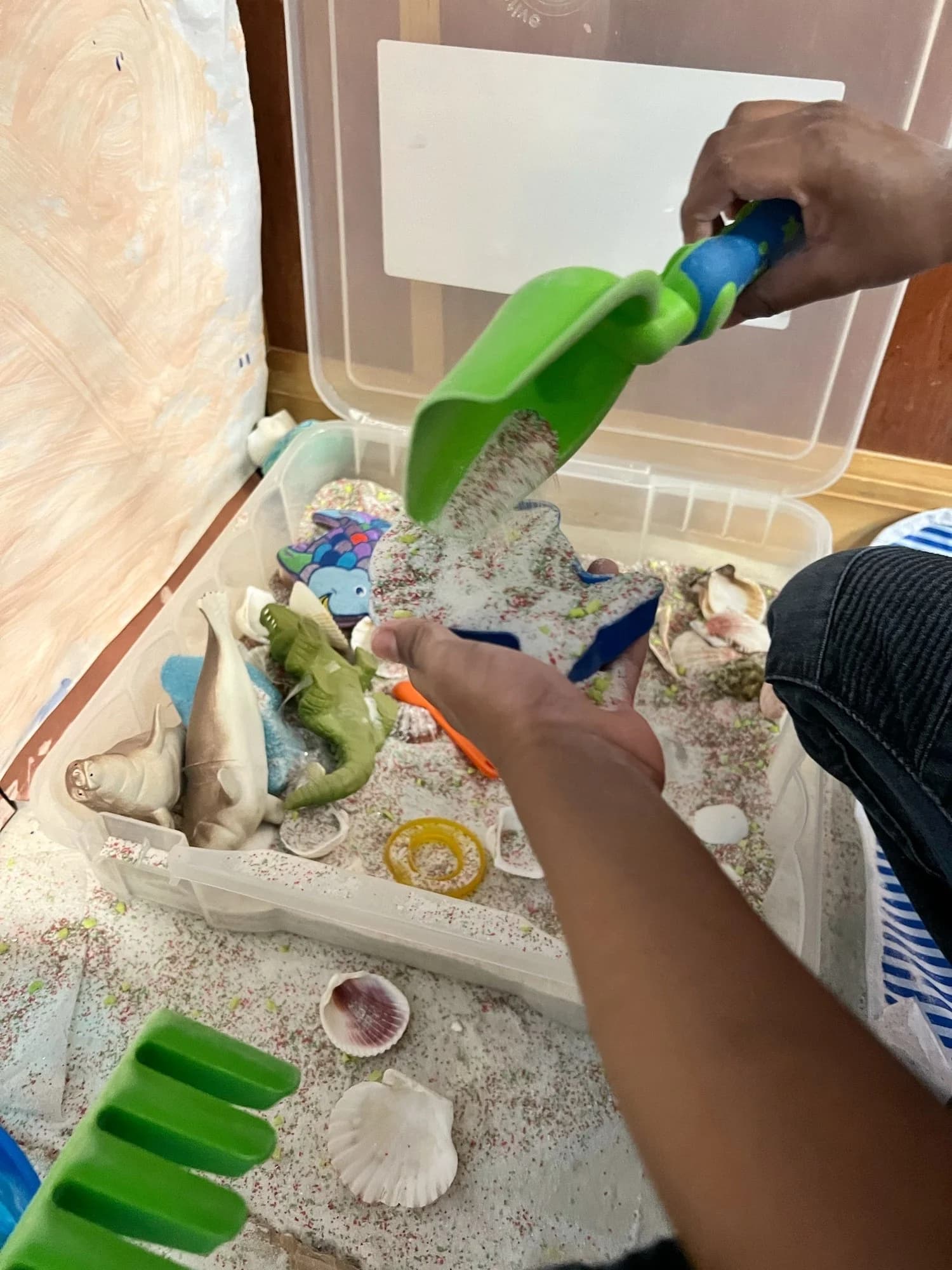
Your toddler is elbow-deep in a bin of dried rice, scooping it into cups and dumping it back out. There is rice on the floor, rice in their shoes, and rice in places you will discover three days from now. You might look at this scene and think: mess. A developmental neuroscientist looks at this scene and sees sensory play building one million new neural connections per second.
That number is not an exaggeration. According to the Harvard Center on the Developing Child, young children form more than one million neural connections every second during the first few years of life. By age two, a child's brain contains roughly 15,000 synaptic connections per neuron, which is approximately twice the density found in an adult brain. The brain builds this massive architecture through experience, and sensory experience is the raw material it uses most.
If your child is in daycare or preschool in Flatbush, Brooklyn, you have probably noticed sensory activities on the daily schedule. Water tables, playdough, sand bins, finger painting. These are not fillers between "real" learning.
They are the learning. And the research behind them is far more robust than most parents realize.
What Counts as Sensory Play?
Sensory play is any activity that engages one or more of a child's senses: touch, sight, sound, smell, taste, as well as the two lesser-known senses of proprioception (body awareness) and vestibular input (balance and spatial orientation). The classic examples are obvious: squishing playdough, splashing water, running fingers through sand. But sensory play also includes listening to rain hit a window, smelling herbs from a garden, stomping feet on different surfaces, and balancing on a beam.
The common thread is that the child is actively processing sensory information, not passively receiving it. Watching a video of someone playing in sand does not produce the same neural response as actually touching sand. This distinction matters, and we will come back to it.
The Neuroscience Behind the Mess
Harvard identifies "sensitive periods" in early brain development when specific types of sensory input have an outsized impact on neural architecture. During these windows, the brain is primed to build connections related to that sensory domain. Miss the window, and the brain can still learn, but the process is slower and less efficient.
For touch, the sensitive period begins at birth and extends through the toddler years. For hearing and vision, the windows open even earlier. What this means in practical terms: the more varied sensory experiences a young child has, the more robust and interconnected their neural pathways become.
Michigan State University Extension puts it plainly: sensory play builds nerve connections in the brain's pathways, which leads to a child's ability to complete more complex learning tasks. Those nerve connections do not form through worksheets or screen time. They form through direct, hands-on interaction with physical materials.
A 2024 study published in Frontiers in Education found that children using multi-sensory educational tools showed stronger engagement and longer retention compared to those using single-channel alternatives. When children could see, hear, and touch the materials they were learning about, they stayed focused longer and recalled more afterward.
Four Misconceptions That Hold Parents Back
Before we go further, there are a few ideas about sensory play that need correcting. These come up regularly in conversations with families at our East Flatbush location, and they keep some parents from fully embracing what their child's program is doing.
"It is just messy fun." This is the most common misunderstanding. When a two-year-old pours water from one container to another at a water table, they are learning about volume, gravity, and cause and effect. When they squeeze playdough, they are strengthening the same hand muscles they will later use to hold a pencil.
The American Academy of Pediatrics addressed this directly in their 2018 clinical report "The Power of Play," which found that play, including sensory play, builds executive function, self-regulation, and cognitive flexibility. Mess is a byproduct. Learning is the product.
"Screen-based sensory apps work just as well." They do not. A touchscreen provides one type of input: smooth glass under a fingertip. Compare that to the sensory data from kneading bread dough: resistance, temperature, texture change, smell, stickiness.
The brain processes the physical version through multiple pathways simultaneously, building denser connections. No app replicates the proprioceptive feedback of squeezing, the olfactory input of smelling, or the vestibular experience of leaning over a table to reach across a tray of materials.
"My child hates getting messy, so sensory play is not for them." Sensory play is not limited to gooey, wet, or sticky materials. Children who are tactilely defensive (uncomfortable with certain textures) benefit from dry sensory activities: sorting smooth stones, running fingers through dry beans, pressing shapes into kinetic sand, or simply handling objects of different weights.
The goal is gradual exposure. Over weeks, many children who start by refusing to touch wet sand will work their way up to finger painting. Teachers who understand sensory development know how to scaffold this progression without forcing it.
"Sensory play is only for children with sensory processing disorders." Every child's brain develops through sensory input. The activities used in occupational therapy for children with sensory processing challenges are the same ones that benefit all children. The difference is dosage and specificity, not the underlying mechanism. A typically developing two-year-old benefits from the same water table that a child receiving OT services uses.
How Creative Curriculum Builds Sensory Play Into Every Day
If your child attends a daycare that uses Creative Curriculum, sensory play is not an occasional treat. It is built into the physical structure of the classroom. Teaching Strategies designates Sand and Water as one of 11 core interest areas in the Creative Curriculum framework. That means every classroom following the framework should have a dedicated space with sensory materials available during choice time.
At Einstein Daycare, the Sand and Water area is stocked with rotating materials based on the current study topic. During a study on buildings, children might explore wet sand with small architectural tools. During a study on food, the sensory bin might contain dried pasta, scoops, and containers of different sizes. The materials change, but the developmental purpose stays constant: children are building neural connections through direct physical interaction with the world.
Sensory learning at Einstein does not stay confined to one area of the room. It shows up across the day:
- Art center: Finger painting, clay modeling, collage with textured materials like fabric scraps and sandpaper
- Discovery center: Magnifying glasses for examining natural objects, scales for weighing, texture cards for matching
- Cooking activities: Measuring, pouring, kneading, and smelling ingredients during simple recipes
- Outdoor play: Digging in soil, running on grass versus pavement, feeling wind and sun
- Music and movement: Rhythm instruments that produce different vibrations, dancing that builds vestibular awareness
- Yoga: Body awareness poses that develop proprioception and balance
The NYC Department of Education uses ECERS-R (Early Childhood Environment Rating Scale-Revised) to evaluate program quality, and sensory materials are explicitly rated as a key quality indicator. A classroom that scores well on ECERS-R will have accessible, varied sensory materials that children can use independently during the day. This is not a suggestion. It is what the city's quality framework expects from strong programs.
Sensory Play by Age: What to Expect
Sensory development is not one-size-fits-all. What a six-month-old needs from sensory experience is different from what a four-year-old needs. Here is what age-appropriate sensory play looks like in a daycare setting.
Infants (birth to 12 months): At this stage, everything is sensory play. Grasping a rattle, mouthing a teething ring, touching different fabric textures, hearing a teacher's voice during a song. The Creative Curriculum for Infants, Toddlers & Twos emphasizes responsive caregiving during these interactions. A teacher who narrates what a baby is touching ("That ball is smooth and round") is supporting language and sensory development simultaneously.
Toddlers (12 to 24 months): Toddlers are ready for more intentional sensory activities: water play with cups and funnels, finger painting on large paper, playing with playdough, and exploring bins filled with dried rice or oats. The key at this age is repetition. Toddlers need to repeat sensory experiences many times to solidify the neural pathways being formed. A child who dumps and fills a cup thirty times in a row is not bored. They are practicing.
Twos (24 to 36 months): Two-year-olds start using sensory materials with more purpose. They might use playdough to make "cookies" or use sand to build a "road." Pretend play merges with sensory exploration, and language becomes part of the experience. Teachers can introduce simple science concepts during sensory play: "What happens when you add water to the sand? Does it change?"
Preschool (3 to 5 years): Preschoolers use sensory materials as tools for investigation. They can follow simple recipes, conduct experiments ("Will this float or sink?"), create art with mixed media, and describe sensory experiences in detail. At this stage, sensory play supports pre-academic skills like measurement, prediction, and descriptive language.
Sensory Play Beyond the Classroom: Flatbush Resources
Sensory-rich experiences do not stop when your child leaves daycare. Families in East Flatbush, Brooklyn have access to several local resources that extend sensory learning into weekends and evenings.
The Prospect Park Zucker Natural Exploration Area is one of the best free sensory environments near Flatbush and Crown Heights. Children can dig in sand, climb on natural wood structures, and explore water features. The textures, sounds, and open-ended play opportunities are exactly what developing brains need. It is accessible from East Flatbush via the B44 bus along Nostrand Avenue or a short drive up Flatbush Avenue.
The Brooklyn Public Library's Paerdegat branch near the 11236 zip code runs an Open Playroom program with sensory stations for young children. These free sessions give toddlers and preschoolers access to sensory bins, building materials, and art supplies in a social setting. Check the BPL events calendar for current schedules.
Even a walk down Clarkson Avenue in Flatbush offers sensory input that a classroom cannot replicate. Different sidewalk textures, the smell of food from local restaurants, the sound of the B12 bus, leaves and flowers in front yards.
Narrating these experiences for your child ("Feel how rough that brick wall is" or "Listen to that bird") turns an ordinary walk into a sensory learning session. You do not need special materials. You need attention.
How Do You Know If a Daycare Takes Sensory Play Seriously?
If you are evaluating daycare programs in the 11203 or 11210 zip codes, or anywhere in East Flatbush, Brooklyn, here is how to assess whether a program takes sensory play seriously.
- Is there a dedicated sensory area? Look for a water table, sand table, or sensory bin that is accessible to children during free-choice time. If sensory materials only come out for special occasions, the program is treating it as an add-on rather than a core learning tool.
- Do the materials rotate? A water table with the same three cups every day gets stale. Strong programs change sensory materials regularly to provide new challenges and connect to current classroom studies.
- How do teachers interact during sensory play? Watch whether teachers sit near the sensory area and engage with children, asking questions and introducing vocabulary. A teacher who avoids the messy area may not value the learning happening there.
- Are there options for children who avoid mess? A program that only offers wet, gooey sensory activities is missing a significant portion of the sensory spectrum. Look for dry options, texture boards, and graduated exposure strategies.
- Does the outdoor area include natural sensory elements? Grass, sand, garden beds, and water features extend sensory learning beyond the classroom walls.
These questions apply whether you are visiting a program on Lenox Road or anywhere else in the borough. The answers will tell you more about a program's educational depth than any brochure.
Bringing Sensory Play Home
You do not need to buy expensive kits or specialty materials. Most effective sensory activities use things already in your kitchen. Here are five activities that reinforce what your child does at daycare, using materials you probably have right now:
- Rice or dried pasta bin: Pour two pounds of dry rice into a large plastic container. Add cups, funnels, spoons, and small toys to find. Lay a towel underneath for easy cleanup.
- Playdough from scratch: One cup flour, half cup salt, two tablespoons cream of tartar, one cup water, one tablespoon vegetable oil. Cook on low heat until it forms a ball. The making is as sensory-rich as the playing.
- Water play in the bathtub: Cups, funnels, turkey basters, and sponges turn bath time into a physics lab. Ask your child to predict which container holds more water before they test it.
- Nature collection walks: On your next walk through the neighborhood, collect leaves, small sticks, smooth stones, and seed pods. Sort them at home by texture, size, or color.
- Frozen excavation: Freeze small toys in a block of ice. Give your child warm water, spoons, and salt to free the objects. This one holds attention for a remarkably long time.
The connection between what happens at daycare and what happens at home matters. When your child's teacher introduces a sensory bin with dried beans on Monday, and you set up a similar bin at home on Saturday, you are reinforcing the same neural pathways from two directions. That consistency accelerates development.
For more on how home and school routines work together, our post on how daily routines help toddlers adjust to daycare covers the research on predictability and learning.
Sensory play is not a trend. It is a foundational element of early childhood development backed by decades of neuroscience, endorsed by the AAP, built into the most widely used curriculum framework in the country, and rated as a quality indicator by NYC's own evaluation standards. The mess is temporary. The neural connections are permanent.
Every time your child squishes playdough, pours water, digs in sand, or runs their hands through a bin of dried pasta, their brain is building the architecture it will use for reading, math, problem-solving, and emotional regulation for the rest of their life. Zero to Three calls the first three years "the most critical period for brain development." Sensory play is one of the most direct ways to make those years count.
If you are looking for a program in East Flatbush, Brooklyn that treats sensory play as serious developmental work rather than an afterthought, visit during active hours and watch what happens at the water table. That will tell you everything you need to know about how the program views early learning.