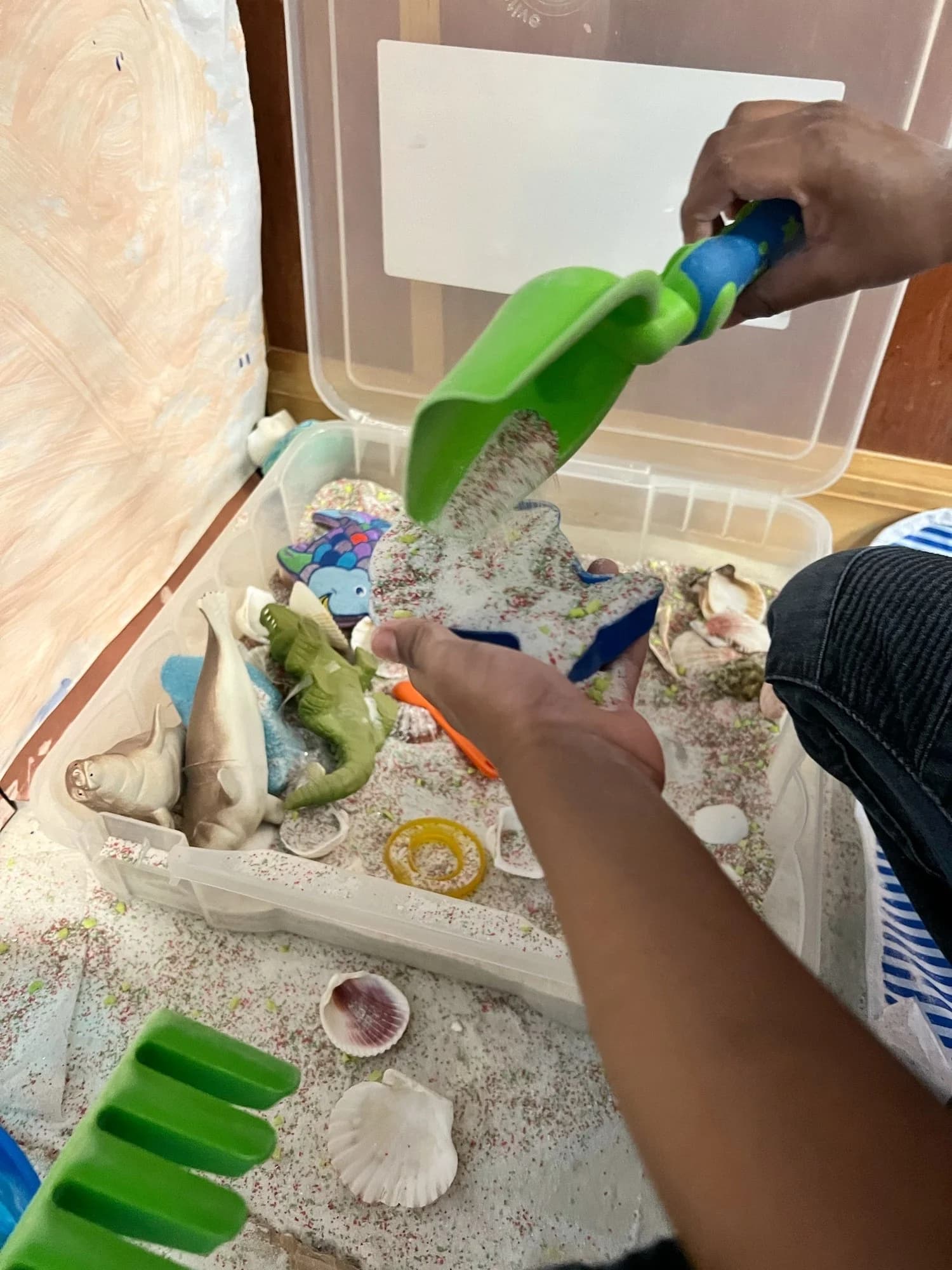
Choosing daycare for an infant or toddler feels different from choosing it for a three-year-old. The stakes feel higher. The questions are more specific. And if you are a parent in Crown Heights, Brooklyn, sorting through options while running on limited sleep, you need clear answers rather than marketing copy.
Infant and toddler care at a licensed NYC daycare looks very different from preschool. The ratios are tighter, the safety requirements stricter, and the daily routines built around the specific developmental needs of children under two. Article 47 of the NYC Health Code, which governs every licensed daycare in the city, reserves its most protective provisions for the youngest children. Here is what those provisions look like in practice, and what you should expect from any program near Crown Heights, East Flatbush, Brooklyn, or the surrounding neighborhoods.
How Infant Group Care Differs from Preschool
A preschool classroom and an infant room operate on entirely different principles. Preschoolers spend their day moving between learning centers, making choices, and interacting with peers through structured activities. Infants need something fundamentally different: consistent routines and responsive caregiving in a physical environment designed for safety and sensory exploration.
In a quality infant room, the day revolves around each child's individual schedule, not a group schedule. Feeding happens when the baby is hungry. Naps happen when the baby is tired. Diaper changes follow a regular cycle. Between those caregiving routines, infants engage in supervised tummy time, sensory activities, music, and one-on-one interaction with their teachers.
A preschool room might have 15 or 16 children moving independently across different learning centers. An infant room with those numbers would be unsafe and unmanageable. The entire structure of infant care reflects the reality that babies need more adult attention per child than older children do, from the physical layout to the staffing ratios to the pace of the day.
For toddlers between roughly 12 and 24 months, the day starts incorporating more group activities: circle time, outdoor play, simple art projects, and structured movement. But the pace is still slower and more flexible than a preschool room. The teacher-to-child ratio stays tighter, and the emotional tone focuses on building security and trust. A toddler who feels safe with their caregiver will explore, play, and learn. A toddler who does not feel safe will spend their energy managing anxiety instead.
What Article 47 Requires for Infant and Toddler Ratios
NYC's staff-to-child ratio requirements under Article 47 are strictest for infants. This is intentional. Younger children require more individual attention, more hands-on care, and more constant supervision.
The law sets these maximum ratios:
- Infants (birth to 12 months): 1 teacher for every 4 children, with a maximum group size of 8
- Toddlers (12 to 24 months): 1 teacher for every 5 children, with a maximum group size of 10
- Twos (24 to 36 months): 1 teacher for every 6 children, with a maximum group size of 12
These are maximums, not targets. The best programs maintain ratios lower than what the law requires. When you visit a daycare, count the adults and count the children. Do this in every room. If the infant room has nine babies and two teachers, that program is over ratio. It does not matter what the director says during the tour. The numbers tell the real story.
Also ask about ratios during transitions, outdoor time, and staff lunch breaks. These are the moments when ratios tend to slip, and they are exactly when attentive supervision matters most. A program that can explain how they maintain coverage during transitions has thought carefully about staffing.
Safe Sleep at Daycare
Safe sleep is non-negotiable for any program caring for infants. Article 47's sleep provisions mirror the American Academy of Pediatrics safe sleep guidelines, and NYC DOHMH inspectors check compliance during every visit.
The rules are specific and strict:
- Every infant sleeps on their back, on a firm and flat surface, in their own crib
- No loose bedding, blankets, pillows, bumper pads, stuffed animals, or positioning devices in the crib
- Infants who fall asleep in car seats, bouncers, swings, or strollers must be moved to a crib immediately
- Swaddling is not permitted in licensed group care settings
- At least one staff member must remain awake and supervising during all nap and sleep times
- All cribs must meet Consumer Product Safety Commission (CPSC) standards
That requirement about staff staying awake during naps is one of the most critical. It exists because the risk of sudden unexpected infant death increases when sleeping infants go unmonitored. No exceptions, no shortcuts. When you tour an infant program, ask to see the nap area and ask the director to describe their supervision protocol during sleep times. Any hesitation in answering that question should give you pause.
Feeding and Nutrition in Infant and Toddler Rooms
Programs serving children under two must accommodate a range of feeding needs: breast milk, formula, and the gradual introduction of solid foods. Article 47 requires that all food handling meet DOHMH sanitation standards and that each child's specific dietary needs and allergies be documented and followed by every staff member in the room.
Breast milk and formula must be properly labeled, stored at correct temperatures, and served only to the child it belongs to. Programs must have a reliable system for tracking each bottle. As babies transition to solid foods, teachers introduce age-appropriate textures and portions based on the child's developmental readiness and the family's preferences.
For toddlers transitioning to table foods, mealtime becomes a learning experience. Sitting at a small table, using utensils, choosing between two options, cleaning up afterward. These are developmental skills that a well-structured toddler program builds into the daily routine. The strongest programs treat meals as part of the curriculum, not a break from it.
If your family follows specific dietary practices for cultural, religious, or medical reasons, discuss this during enrollment. A strong program will document your child's needs and train every staff member who handles food in that classroom. East Flatbush is home to families from Haitian, Jamaican, Trinidadian, and Guyanese backgrounds, and a good program respects the specific foods and practices each family brings.
Daily Health Checks for the Youngest Children
Article 47 requires a daily health inspection of every child at arrival. For infants and toddlers, this screening takes on added importance because the youngest children cannot tell you when something is wrong.
Trained staff check each child for signs of fever, rash, lethargy, unusual fussiness, eye or nasal discharge, and any visible injuries. If something looks off, the child is separated from the group and the parent is contacted. This process happens every single morning for every child with no exceptions.
Beyond the morning check, teachers in infant and toddler rooms monitor throughout the day. They track feedings, diaper changes, nap times, and mood shifts. Many programs, including ours, share this information with parents at pickup so you know exactly how your child's day went. That daily communication is especially important for families with pre-verbal children who cannot describe their day on the walk to the car or the ride back through Crown Heights on the B44.
What Responsive Caregiving Looks Like in Practice
Child development research consistently shows that the quality of the caregiver-child relationship during the first two years has lasting effects on social-emotional development. Zero to Three, the leading national authority on infant and toddler development, has documented this extensively. Responsive caregiving means a teacher who notices when a baby is tired, hungry, overstimulated, or seeking connection, and responds promptly and consistently.
In a daycare setting, responsive caregiving looks like a teacher who makes eye contact while feeding a baby. It looks like a teacher who narrates what she is doing during a diaper change: "I am going to lift your legs now. There you go." It looks like a teacher who picks up a crying infant quickly instead of letting them "self-soothe" at four months old.
You can observe this during a tour. Watch how teachers interact with the babies in their care. Do they speak to infants directly? Do they respond to cries within seconds? Do they seem to know each child's individual cues and preferences? The answers to these questions matter more than the paint on the walls.
Programs that use a formal assessment tool like Teaching Strategies GOLD build responsive caregiving into their daily practice. Teachers document observations of each child's behavior and development, which informs how they adjust their interactions and plan activities. It creates a feedback loop between observation and action rather than relying on guesswork.
Choosing an Infant or Toddler Program
Finding the right program for a baby or toddler in the 11225 or 11203 zip code comes down to a handful of core factors. Here is what to verify during any tour:
- Ratios: Count heads in the infant room. No more than 4 children per teacher. Toddler rooms: no more than 5.
- Sleep safety: Ask to see the cribs. No loose bedding. At least one staff member awake during naps.
- Staff qualifications: Ask about the education director's credentials and how many hours of professional development teachers complete every two years.
- Daily communication: How will you know what happened during your child's day? Written daily reports, an app, or a face-to-face conversation at pickup?
- Health screening: What does the morning health check look like, and who performs it?
For parents commuting from Crown Heights via the 2 or 5 train at Nostrand Avenue, proximity to the daycare along your commute route makes the morning drop-off significantly easier. A program on your way to the train, rather than a detour across the neighborhood, saves real time five mornings a week.
You can read more about how to verify a program's NYC licensing status and inspection records in our guide to Article 47. And for details on the health and sanitation standards that licensed programs must meet, see our health and safety guide for Brooklyn parents.
A good infant or toddler program gives your child a second secure base outside the home. It supports the developmental work happening at an extraordinary pace during the first two years. And it gives you, the parent, the ability to work knowing your child is safe and genuinely cared for.